First Timer Guides · Part 2
Your First Night Under the Stars: A Beginner's Camping Checklist
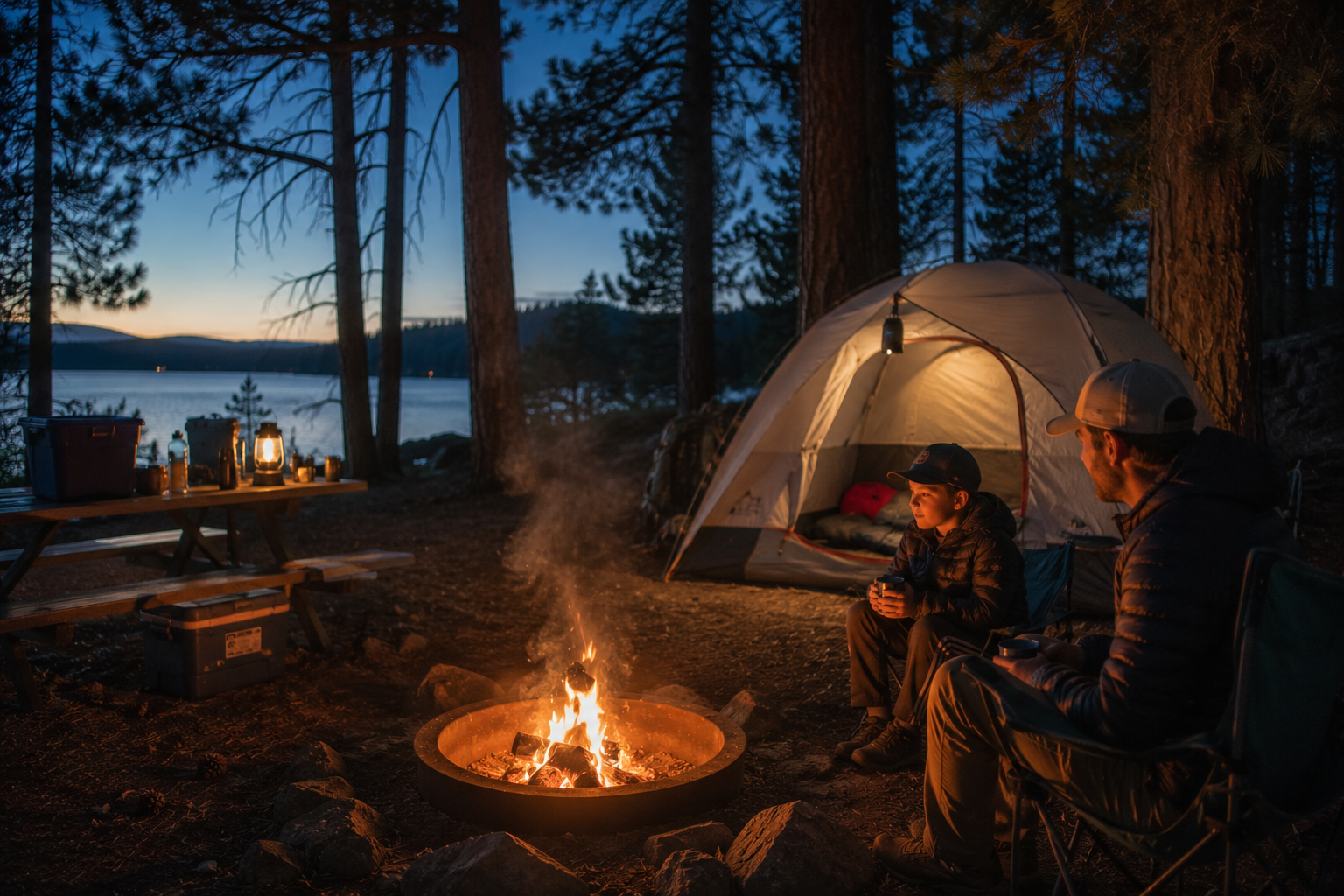
There's something about sleeping outside that no amount of describing can prepare you for. The air smells different. The dark is darker than you think. And the first time you unzip your tent in the morning and see mist rising off a lake, you'll understand why people keep coming back.
But let's be honest: the first night can also be nerve-wracking. Strange sounds, unfamiliar sleeping arrangements, and the nagging question of whether you forgot something important. This guide is here to make sure the answer is no — and to make your first campout one you'll want to repeat.
Start With Car Camping (Seriously)
If you've never camped before, your first night should be at a developed campground where your car is parked 30 feet from your tent. This isn't cheating. This is smart.
Developed campgrounds have bathrooms, picnic tables, fire rings, and often running water. If something goes wrong — you forgot a sleeping pad, the rain fly won't cooperate, your stove won't light — your car is right there as a backup.
Think of car camping as a dress rehearsal. You'll learn how your gear works, what you actually need versus what you packed “just in case,” and how you sleep outdoors — all within walking distance of a flush toilet.
Picking Your First Campground
The right campground makes all the difference for a first-timer. Here's what to look for:
- Facilities matter. Hot showers, flush toilets, and potable water take a huge amount of stress out of a first campout.
- Close to home. Under two hours from your front door means less driving and more time enjoying camp.
- Reservable sites. Book a site ahead of time so you can show up and start setting up without stress.
- Nearby trails. Pick a campground near easy trails for built-in activities.
Three First-Timer Campgrounds on Adventure Spark
Beals Point Campground
$35/night · 69 sites · Granite Bay
Only about 30 minutes from Sacramento, Beals Point sits on Folsom Lake with beach access and water recreation. A perfect beginner-friendly campground.
Finnon Lake Recreation Area
$30/night · 25 sites · Placerville
Small, quiet, and affordable with easy lake access and a low-key atmosphere ideal for families.
Sugar Pine Point State Park
$40/night · 175 sites · Tahoma
A scenic wooded campground on Lake Tahoe's west shore with lakeside trails and year-round access.
The Gear Checklist
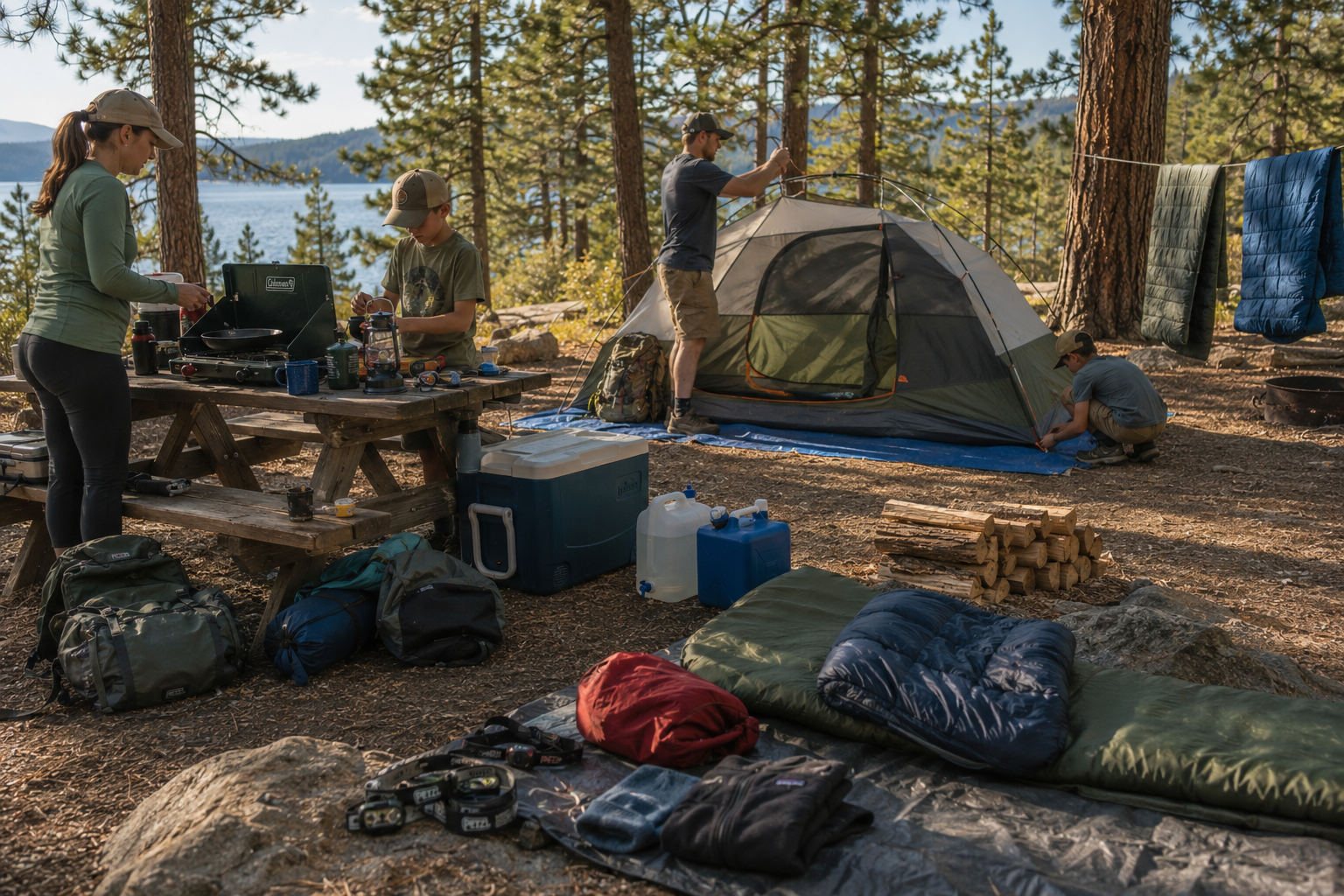
Here's everything you need, organized by category. Borrow gear before investing in expensive equipment.
Sleep System
- Tent: Practice setting it up before the trip.
- Sleeping bag: A 35–40°F bag works for most summer Northern California nights.
- Sleeping pad: Essential for warmth and comfort.
- Pillow: Use a stuff sack with clothes or bring one from home.
Kitchen
- Camp stove and fuel
- Cooler with ice
- Water
- Cooking pot and utensils
- Biodegradable soap and sponge
- Trash bags
Personal Items
- Headlamp
- Extra layers
- Toiletries and towel
- Camp chair or sitting pad
Things Most Beginners Forget
- Extra tent stakes
- A tarp
- A clothesline and clips
- Matches or a lighter
- A lantern or extra area light
Setting Up Camp Like a Pro
- Scout your site and find flat ground for your tent.
- Set up your tent first while there is still daylight.
- Organize your kitchen area and keep food away from your tent.
- Arrange sleeping gear and keep essentials accessible.
- Explore the campground before dark.
Campfire 101
- Use the fire ring. Never build fires outside designated areas.
- Buy firewood locally. Prevent the spread of invasive pests.
- Build it in stages. Start with tinder and kindling before larger logs.
- Know the restrictions. California fire rules change frequently.
- Put it dead out. Drown, stir, and check for heat before leaving.
Three Easy Camp Meals
Dinner: Foil Packet Meals
Combine chopped vegetables and protein in heavy-duty foil with olive oil and seasoning. Cook over coals or a grate for 20–25 minutes.
Evening: S'mores
Graham crackers, marshmallows, and chocolate — simple campfire tradition and part of the experience.
Breakfast: Instant Oatmeal and Fruit
Boil water on a camp stove and add it to oatmeal with fruit or trail mix for an easy breakfast.
The Sounds of Night (And Why They're Fine)
The first night outdoors can feel loud — rustling leaves, creaking branches, and distant animal sounds are normal at campgrounds.
- Keep a headlamp within reach.
- Store food properly and never in your tent.
- Prepare for cold nighttime temperatures.
- Understand that poor sleep on the first trip is normal.
Leave No Trace at Camp
- Pack out all trash.
- Clean your fire ring.
- Don't damage trees.
- Dump wastewater properly.
- Leave natural objects where you found them.
You Did It
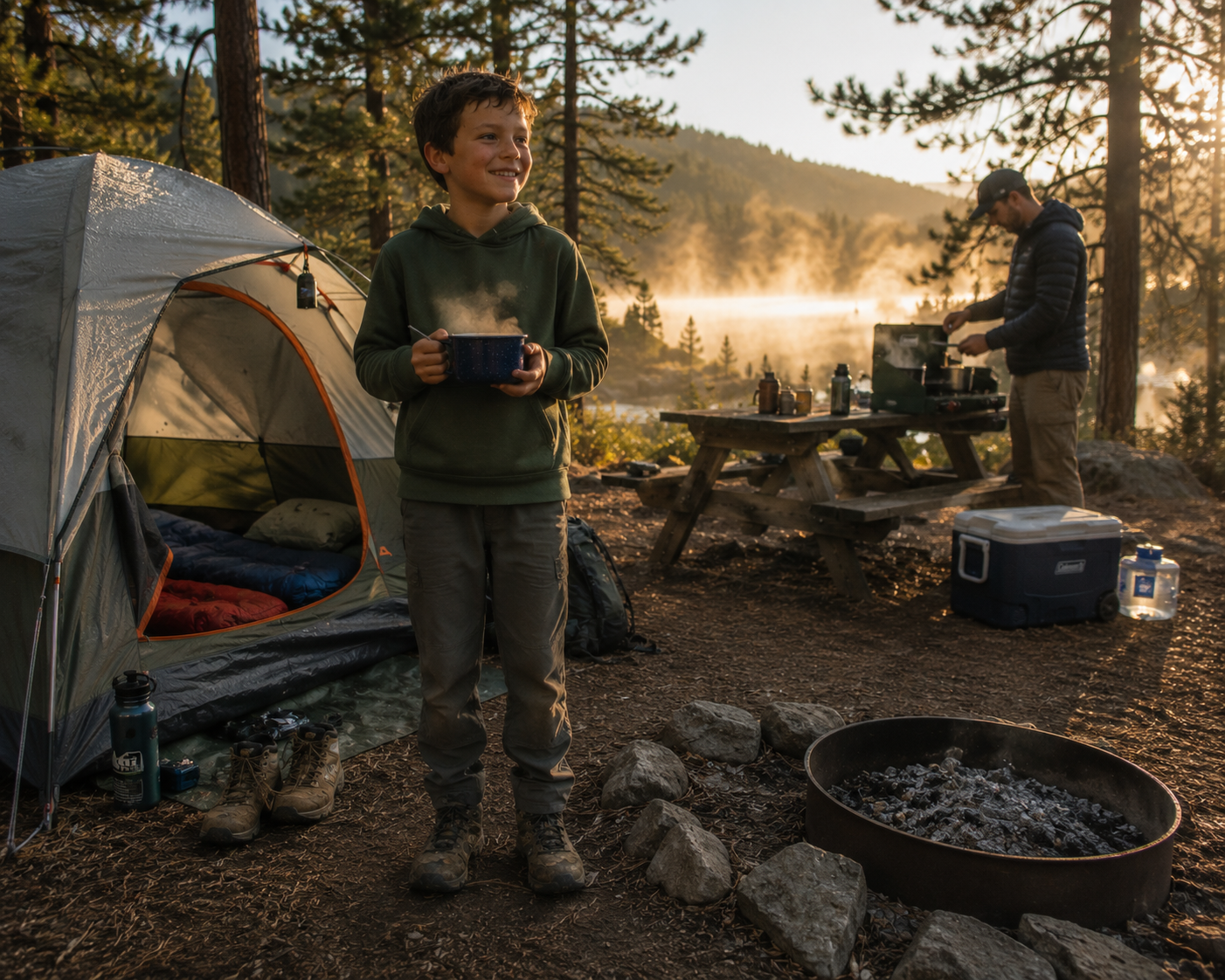
Your tent is packed, your fire is dead out, and you're heading home with smoke in your hair and dust on your boots. That's the smell of a successful first campout.
Camping gets better every time. The first trip is about learning. The second trip is where the fun really starts.
Had a great first campout? Add the campsite to Adventure Spark so other scouts know where to start. →