First Timer Guides · Part 1
Your First Day Hike: A Step-by-Step Guide for New Scouts
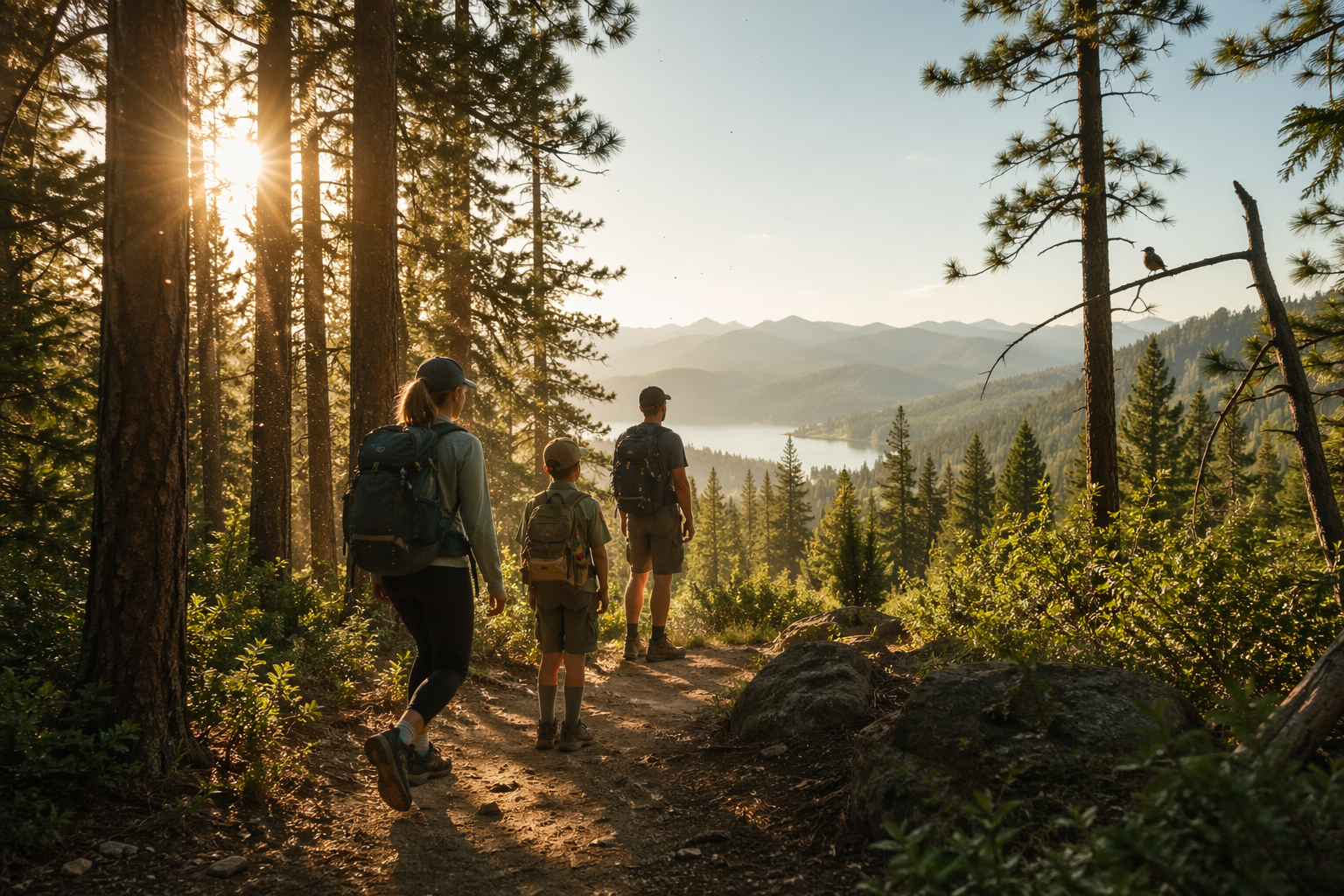
There's a moment on every first hike — usually about 20 minutes in — where something shifts. The noise in your head quiets down. The trail levels out after that first little climb. You hear a bird you can't name, or you round a corner and see a view that stops you mid-step. That's the moment you become a hiker.
The whole point of your first hike isn't to conquer anything. It's to enjoy it enough to want a second one. Everything in this guide is designed to get you to that moment — prepared, comfortable, and ready to soak it in.
Picking Your First Trail
Not all trails are created equal, and the wrong first trail can turn a great day into a miserable one. Here's what to look for:
Keep it short. Two to four miles is the sweet spot. That's long enough to feel like an accomplishment, short enough that tired legs won't ruin the experience. You can always go longer next time.
Look for "Easy" or "Moderate" ratings. Steep trails with big elevation gain are exhausting when you're not used to them. Save the summit scrambles for later.
Choose well-marked trails. Your first hike isn't the day to practice backcountry navigation. Look for trails with clear signage and obvious paths.
Stay close to home. A two-hour drive to a trailhead means four hours in the car on top of your hike. For your first outing, an hour or less keeps the day manageable.
Three Great Starter Trails on Adventure Spark
If you're in the Sacramento or Northern California area, here are three trails that check every box for a first hike:
Fallen Leaf Lake Trail — Easy · 2 miles · South Lake Tahoe
A flat, well-maintained path along the shores of one of Tahoe's most beautiful lakes. Pine forest, clear water, mountain reflections. It's short enough for younger scouts and scenic enough to feel like a real adventure.
Tahoe Meadows Interpretive Loop — Easy · 2.4 miles · Incline Village, NV
A gentle loop through subalpine meadows with educational signs along the way. Wildflowers explode in summer, and the interpretive stations give younger scouts something to read and talk about between steps. A perfect "learning hike."
Cosumnes River Preserve Trail — Easy · 3.2 miles · Galt
Only about 30 minutes south of Sacramento, this trail winds through wetlands and grasslands with a paved boardwalk section. Over 250 bird species live here, so bring binoculars if you have them. It's flat, accessible, and close to home — the lowest-commitment first hike on this list.
The 6 Essentials: Your Pre-Hike Checklist
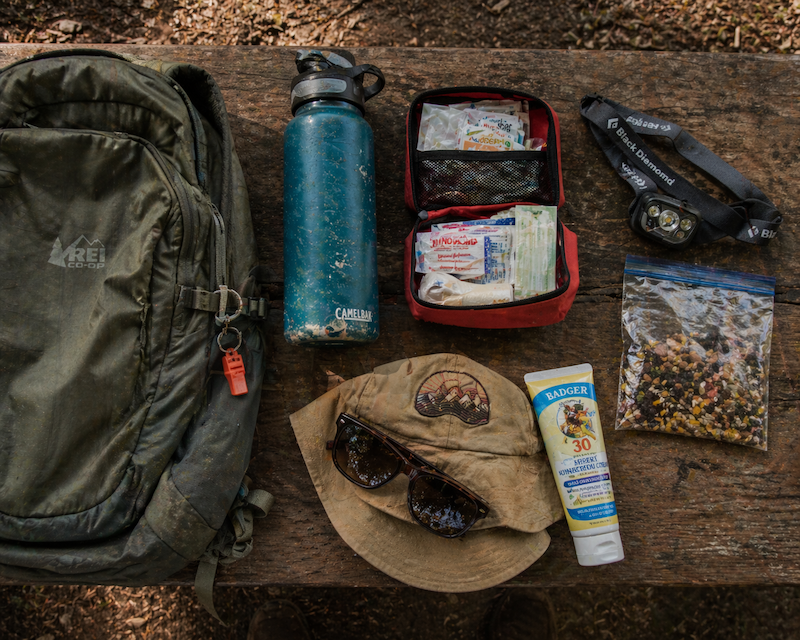
Before you worry about hiking poles, GPS watches, or moisture-wicking base layers, you need six things. That's it. Six. These are the Scout Essentials, and they've kept hikers safe for generations.
1. Filled Water Bottle
Not a half-empty bottle from your car's cup holder. A full bottle, large enough to last your entire hike. For a 2-4 mile day hike, 16-32 ounces is usually enough, but when it's hot out, bring more than you think you'll need. Drink regularly — by the time you feel thirsty, you're already behind.
2. Small First Aid Kit
You don't need a trauma bag. You need adhesive bandages, a few strips of moleskin for blisters, some gauze, antiseptic wipes, and any personal medications. Toss it in a quart-sized zip-lock bag and it'll weigh almost nothing. The key is having it *before* you need it.
3. Whistle
Three blasts on a whistle is the universal distress signal, and a whistle carries much farther than your voice. Clip it to your pack strap so it's always within reach. Use it only in genuine emergencies — it's not a toy on the trail.
4. Flashlight or Headlamp
"But we'll be done before dark." Probably. But trails take longer than you expect sometimes, and having a light source means a slow hike out instead of a scary one. A small headlamp weighs a couple of ounces and keeps your hands free. Bring it every time.
5. Sun Protection
Sunscreen (SPF 30 or higher), sunglasses, and a hat. You'll be surprised how fast you burn at elevation, even on cloudy days. Apply sunscreen before you start hiking, not after you're already pink. Reapply every two hours.
6. Trail Mix or Snacks
High-energy, non-perishable food you can eat on the move. Nuts, dried fruit, granola bars — whatever you like. Pack more than you think you'll eat. A scout who's hungry is a scout who's miserable, and snack breaks are one of the best parts of hiking anyway.
Pro tip: Pack all six the night before. Morning-of scrambling leads to forgotten essentials, and there's nothing worse than realizing your water bottle is on the kitchen counter when you're 45 minutes into the drive.
What to Wear
Here's the good news: you don't need to spend $300 on hiking boots for your first outing.
Shoes: Trail runners or sturdy sneakers with decent tread are fine for easy trails. What matters more is that they're broken in — a first hike is not the day to debut new shoes. Skip sandals and flip-flops.
Socks: This is where most beginners make their first mistake. Cotton socks get wet from sweat, stay wet, and cause blisters. Wool or synthetic hiking socks are worth the investment even if nothing else is. One good pair of socks can save your whole day.
Layers: Northern California mornings can be chilly, especially near the Sierra. Wear a light moisture-wicking shirt as your base, bring a fleece or light jacket for the start, and be ready to peel layers as you warm up. Avoid cotton t-shirts for the same reason you avoid cotton socks — once they're wet, they stay wet and cold.
Hat and sunglasses: A baseball cap or wide-brimmed hat keeps the sun off your face and neck. Sunglasses reduce eye strain on exposed trails. Both weigh nothing and make a big difference.
The general rule: dress for 20 degrees warmer than the temperature at the trailhead, because you'll be generating a lot of body heat once you start moving.
Trail Etiquette 101
The trail has unwritten rules, and knowing them makes the experience better for everyone.
Yield to uphill hikers. If someone is grinding uphill and you're heading down, step aside and let them pass. Uphill hikers have the right of way because stopping and restarting on a climb is exhausting.
Stay on the trail. Cutting switchbacks and wandering off-trail damages fragile plants and causes erosion. Stick to the established path, even when a shortcut looks tempting.
Pack it in, pack it out. Everything you bring onto the trail comes back with you. Every wrapper, every tissue, every orange peel. Leave No Trace isn't just a slogan — it's the reason trails stay beautiful.
Keep your volume reasonable. You don't have to whisper, but blasting music from a speaker or shouting across the trail isn't great for the people (and animals) around you. Enjoy the sounds of the outdoors.
Say hi. A simple "good morning" or a nod to other hikers is trail culture. It's friendly, and it also means other people on the trail have seen you — which matters if something goes wrong later.
When Things Go Sideways
Most hikes go perfectly. But part of being prepared is knowing what to do when they don't.
You're lost. Stop. Don't keep walking hoping you'll figure it out. Look around for trail markers, blazes, or cairns (stacked rocks). If you can, retrace your steps to the last point where you were sure of the trail. If you can't, stay put and use your whistle — three blasts, pause, repeat. This is why you told someone where you were going before you left (you did that, right?).
Blisters are forming. Stop and deal with them immediately. Moleskin from your first aid kit goes *around* the blister, not on top of it, creating a donut that relieves pressure. Waiting until you're back at the car means a small hot spot becomes a painful, trail-ruining problem.
Weather is changing. Dark clouds building, wind picking up, temperature dropping fast — these are signs to turn around. There's no shame in cutting a hike short. The trail will be there next weekend. You can check conditions ahead of time, but mountain weather can shift quickly, especially in the Sierra.
Your phone dies. And this is exactly why the Essentials list includes a flashlight and a whistle instead of "a fully charged iPhone." Your phone is a great bonus tool, but it's not a survival plan. On your first few hikes, consider bringing a simple printed map of the trail from the trailhead kiosk or downloaded ahead of time.
Your Post-Hike Debrief
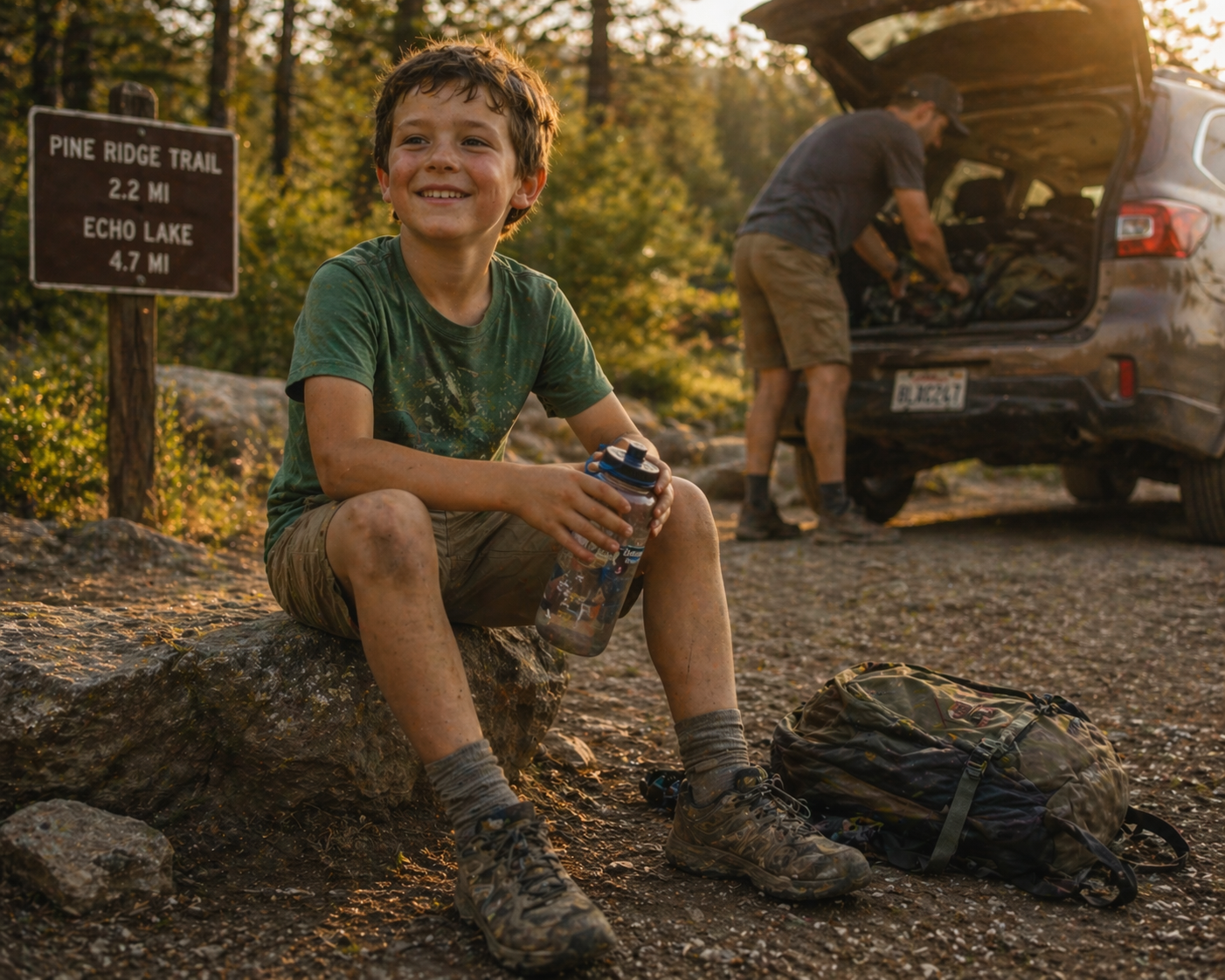
You made it back to the car. Your legs are a little tired, your water bottle is empty, and you've got trail dust on your shoes. Congratulations — you're a hiker now.
Before you drive home, take a minute to think about the hike:
- What was your favorite part?
- Was there anything you'd do differently next time?
- Was the trail too easy, too hard, or just right?
- What would you tell another scout about this trail?
That last question matters, because your experience is valuable. The trails and campsites on Adventure Spark are community-curated — they come from scouts who've been there and want to help the next person find their way.
Found a beginner trail you love? Share it!
Check out the next article in this series: Your First Night Under the Stars: A Beginner's Camping Checklist